So, I Bought a Horse…sort of.


[Originally posted on Facebook (11 Nov 2024)]


What follows is a tale of how I used my auction expertise to help a friend buy a horse at auction. You’ll see how auctions work and how a little psychology and game theory can help you win more than you might otherwise.


Jess and I recently went to dinner with Denis and Barbara one Friday night. They are a retired couple in our neighborhood whose property backs up to the woods around the Supplee Reservoir. They have enough land to have horses and have three Icelandic horses (it’s a separate breed and a whole story on its own). Jess has been hanging out with Barbara for the last couple of years, going on adventures, helping around the place, and riding the horses on the trails around the Reservoir.


At dinner, Jess and Barbara were making plans for the next day. They wanted to go to this horse and livestock auction in Thurmont and check out an Icelandic that was in the sale. Two of Barbara’s Icelandics are 30+ years old and can’t be ridden much anymore, so she was looking for another so she would have at least two usable horses for trail riding. The debate was over how serious she was about going for the horse, whether to take the practical Honda on the road trip or take the truck/trailer, hoping the horse was as good in person as it looked in the listing (and that they won it).


Knowing that I always go to auctions, they asked if I would do the auction part for them. I was happy to do that. I love live auctions. But I didn’t want to spend all day on a Saturday in Thurmont. As lovely a place as it is, as the only one at the table with a day job, I like to get some shop time in, and the horses weren’t going up until 4 p.m.


So, I proposed they go to the auction in the Honda early and check out the horse. If they decide they want it, they can call me. I would get Barbara’s horse trailer and drive up in time for the auction.


And so it was. At 2 p.m., Jess called, excited about the horse, and told me to fetch the trailer and get up there. With Marcus’s help, I got the trailer and went to the auction just as they started the horses. Our target was number 15, so I had 30 or 40 minutes to settle in and learn this auction’s rhythm. Plus, they had already saved me nice seats and the bidder number, so I was set.


As is typical for auctions, many may have numbers, but only a handful bid. My usual competition is other dealers, but at tool auctions, there are several hundred lots for sale; this sale had 20 horses. Most bidders were regular folks, nervous about bidding in big dollar increments and intimidated by the fast and loud auctioneer.


You get the hang of it once you have been to a couple and paid attention. They are trying to create a sense of urgency and interrupt higher brain function. You are unsure what’s going on and want that thing. Keep bidding. In practice, you have plenty of time. They work on commission, so they milk the last bid, trying for more.


You must be a little dispassionate at auctions; you will lose some. At tool auctions, I come armed with a list of lots I plan to bid on and the most I want to pay for. Since I am flipping the tools, I won’t spend more than half what I can sell them for. With that number fixed in mind, I can bid however I want until I hit the number. Then I stop.


If I win it, great. If not, I look ahead to the next lot I have targeted. I win about 1/3 of the lots I target. Knowing I would likely get called in, I researched what Icelandic horses in that age range (18-20 yr old) typically went for and figured we were looking at $8K to $10K to win this one. Some outliers exceeded $16K; I couldn’t see why. They looked the same to me.


Barbara set our budget at $12K, though there was some wiggle room if necessary. I was pretty sure we wouldn’t need it.


Auctioneers always start with an optimistic bid, hoping for a rookie or overeager bidder (like Jess and Barbara). In this case, they opened at $10K. Do nothing. They will cut it down until they get bidders. And, down they went: $8K, $5K, $4K, until they hit the left bid for $4K. Do nothing yet. You have plenty of time.


Once people start bidding, we’ve found the floor, and the fun begins. In this price range, the bidding increment is $500. So, with a $4000 left bid, they were looking for $4500. I waited, and sure enough, someone in the crowd bid $4500—perfect.


Anchoring on round numbers is a thing, and people hesitate to cross them. So now I jump in and bid $5K, a nice round number. If there is just this one bidder, I will always be on the round number, adding that little extra psychological strain to the other bidder. And, in fact, there was just this other bidder.


Now we turn up the heat and make them let me have the horse 🙂


I’ve found that people bid slower as they get closer to their budget. I don’t. When it’s my turn to bid, I immediately bid without hesitation until I hit my limit. Then it’s back on them to cross a round number and think about the money they’re about to spend.


Also, auctioneers love it when you bid fast; it adds to that sense of urgency they are trying to build. So it went back and forth for a while, but, as I predicted, they started to slow down, and in the $8K range, they bid $8250 instead of $8500. That’s called cut bidding; most auctioneers will let you do it. Auctioneers will sometimes do it if they sense they might be able to pull one more bid out of you.


Now, I sat back with a smile and told Barbara we had this. Once your opponent makes a cut bid, you know they are close to the end of their tether. We were nowhere near ours. It’s very unusual for bidding to go much further once cut bidding starts.


And it didn’t. They bowed out, and we got the horse under my $10K personal target. It was huge fun and well worth the trip. And, of course, we have another horse, which led them to get me out there riding with them. That’s another story, too.


Meet Hekla, a 19 yr old Icelandic mare.
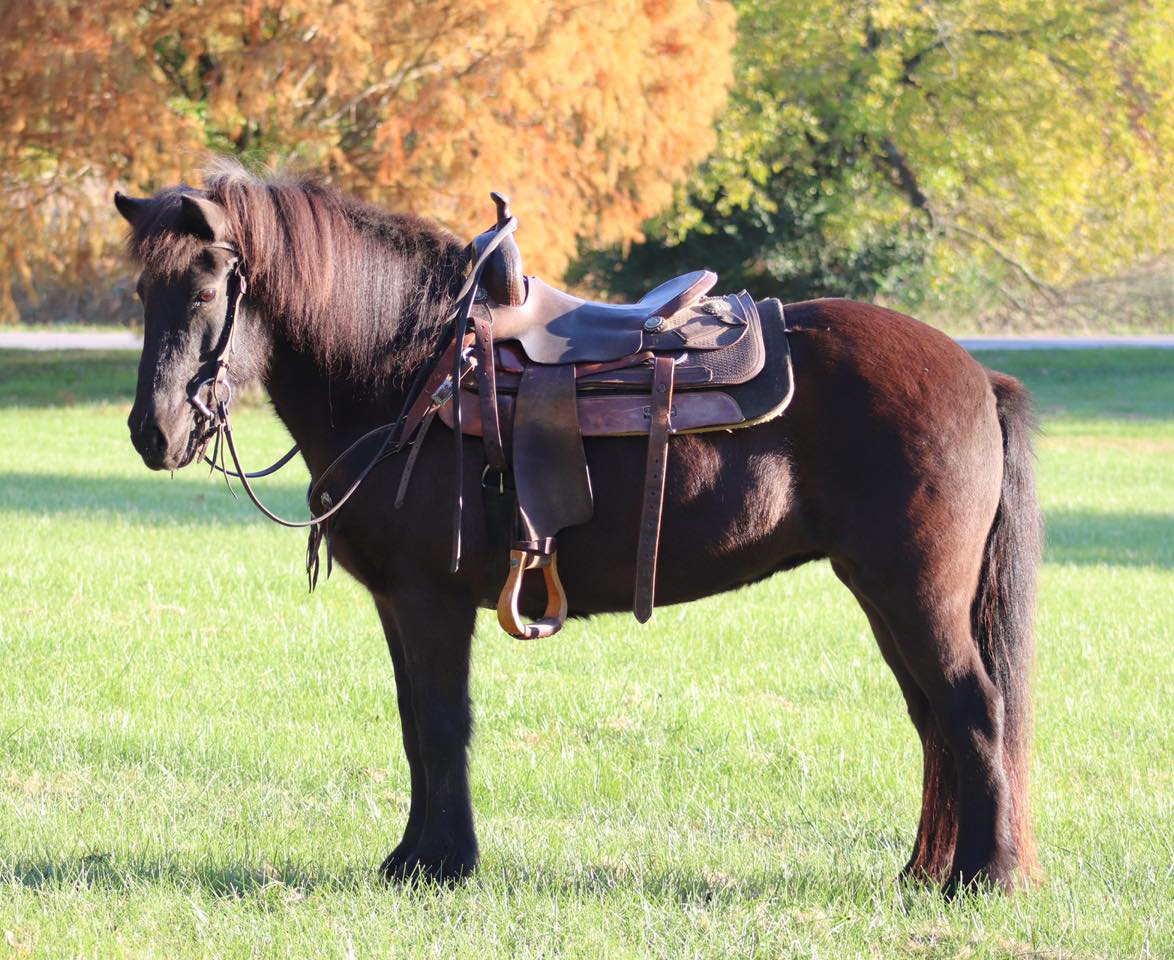
 

Hekla - Icelandic Mare
Hekla – Icelandic Mare

Toiling away

The last several weeks have been consumed with building a final batch of folding stools (for now).

This time, I experimented with red and blue aniline dyes on birch since that’s the whitest wood I could find that was reasonably priced and suitable for furniture. Blue was shockingly effective—at getting blue everywhere. This stuff comes as a powder that can be best described as smoke. It’s that fine. Mixing just 2.5 grams into a pint of alcohol gets you the business end of a box of Sharpies in a jar.
The red wasn’t quite as saturated, although it also comes as a very fine powder that, when mixed up, was deep blood red. I was a little less careful with the red, and now my junky workbench (where we do tool cleaning and sharpening) looks like I butchered a large animal or something. Meh. It’s not my good workbench.

After the dye dried, I experimented to find the best next step. I usually start with shellac since it’s so forgiving and nearly non-toxic. But it’s solvated in alcohol, which reactivates the dye and creates a HUGE mess. The best solution turned out to be an oil-based sanding sealer. 

Once the dye is safely sealed, you must sand (duh) because the previous operations have raised the grain. Then, on to a varnish (with a different brush because the one you used for the sanding sealer step will have some dye contamination). When that dries, it will look like shit. That’s OK. It takes more than one coat. So, now we sand and varnish until it stops looking like crap.

Usually, three coats do it. Between coats, there is a 6-8 hour drying time, and since these pieces don’t have an “inside,” that’s six varnishing sessions. Hence, all the whining about my small shop totally blocked up with this.

I made one red and one blue. For some contrast, the top and bottom rails are yellow. That was achieved with a couple of coats of amber shellac and then a top coat of varnish on birch. Maple would also work.

Below are some pictures. The stripy one is not dyed. It is bubinga and curly maple with a varnish top coat. Finishing these dyed stools is way too much work, so I am unlikely to do it again.


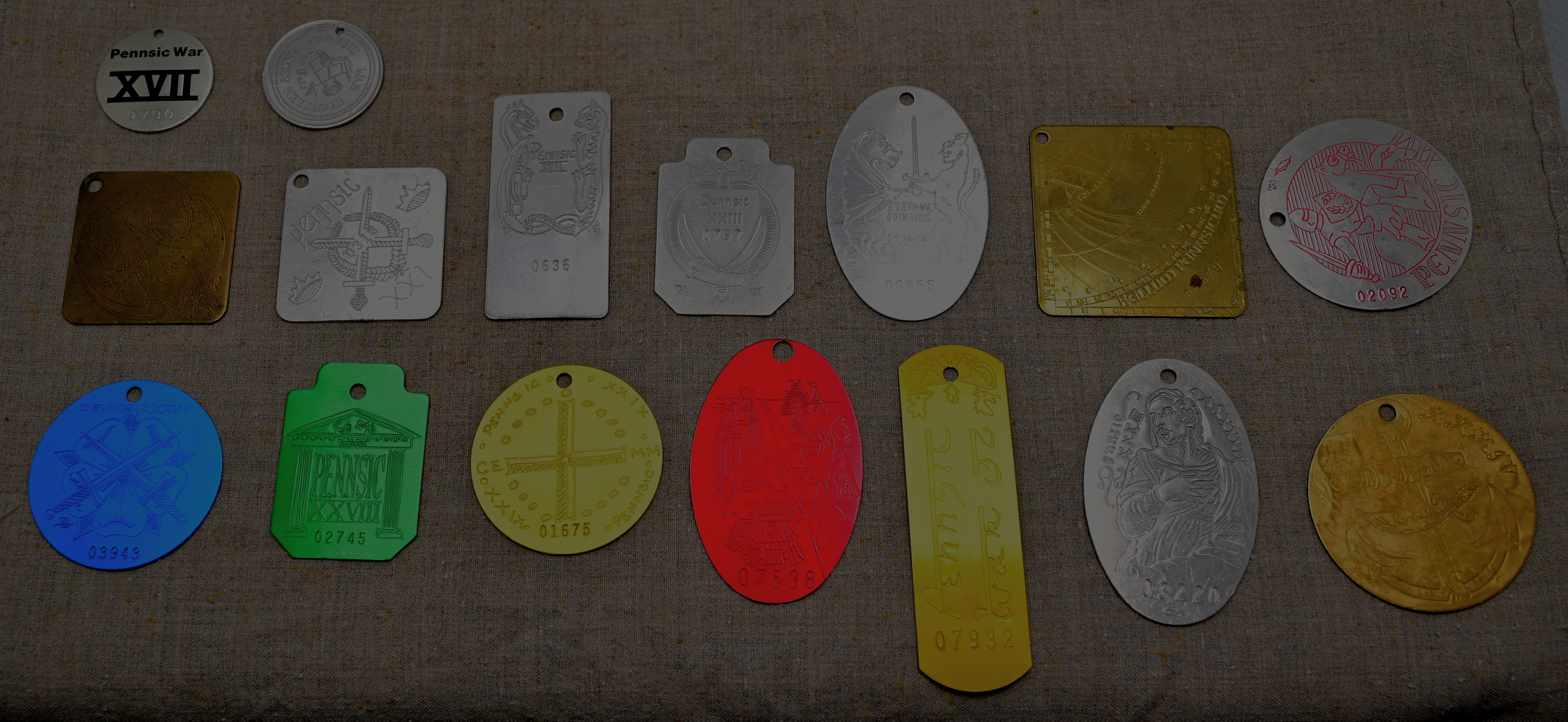
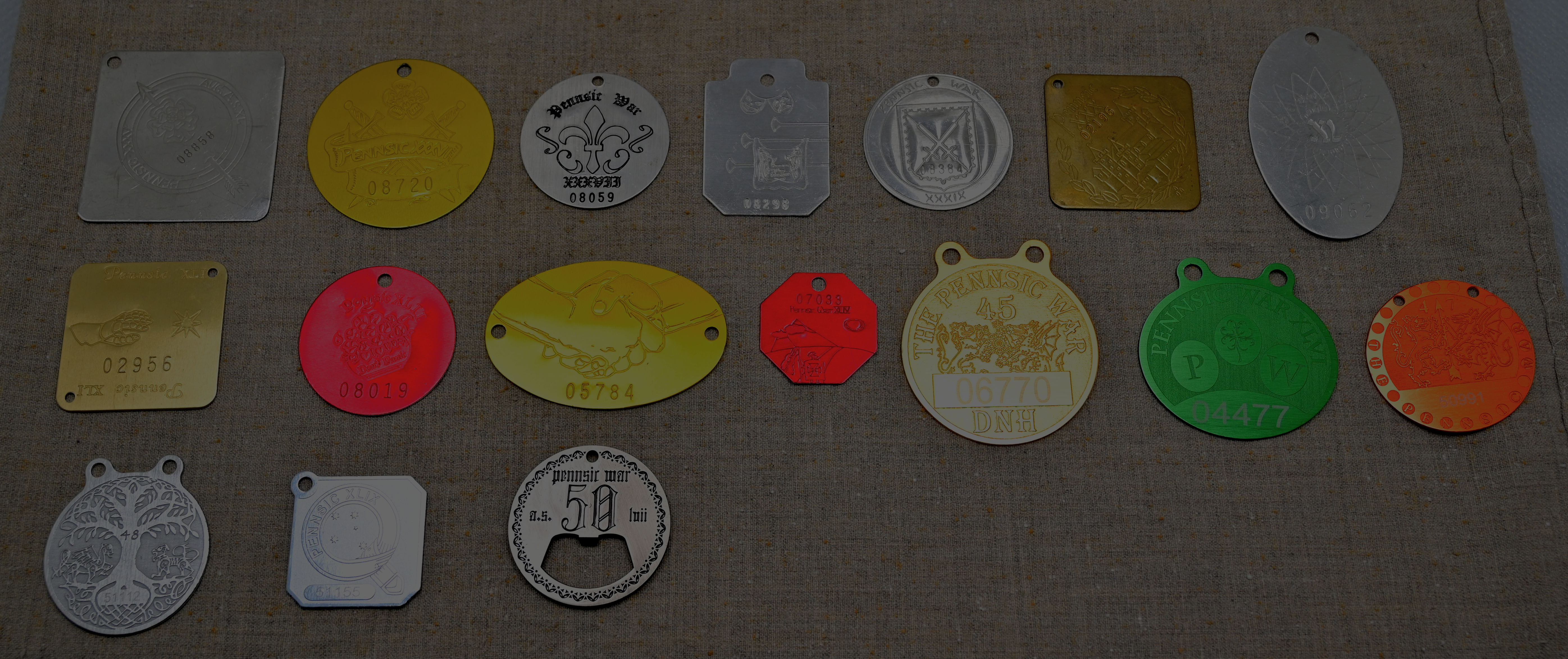
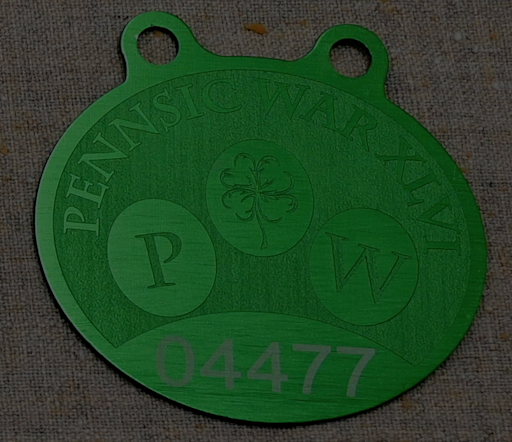
A Collection of Pennsic Medallions

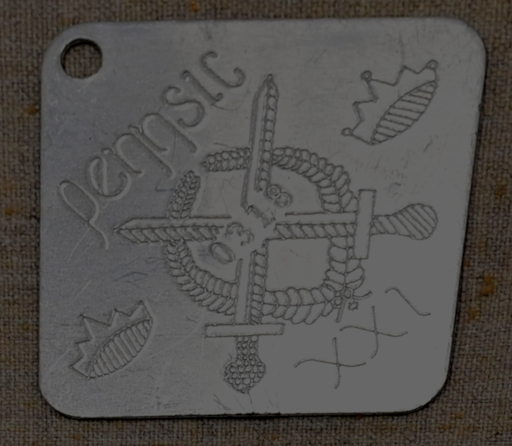
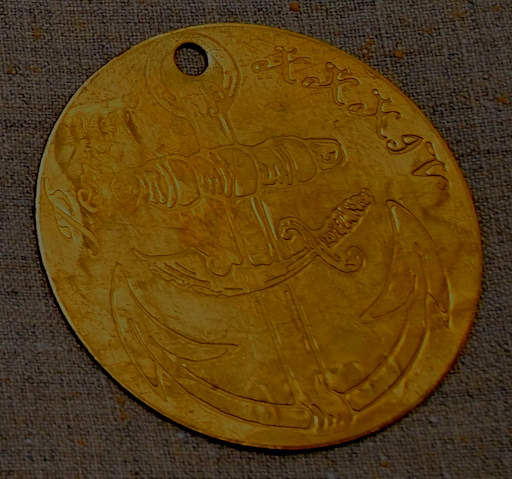
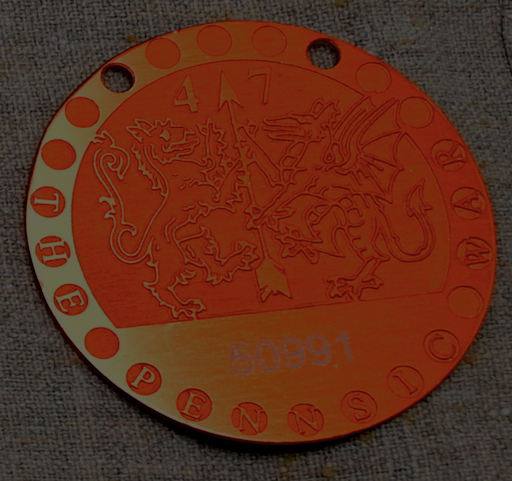
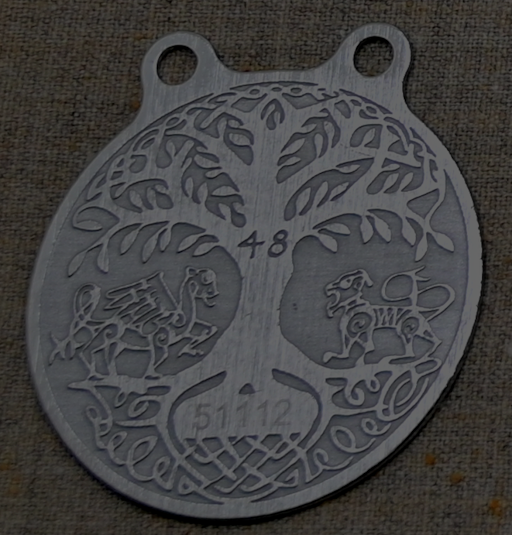
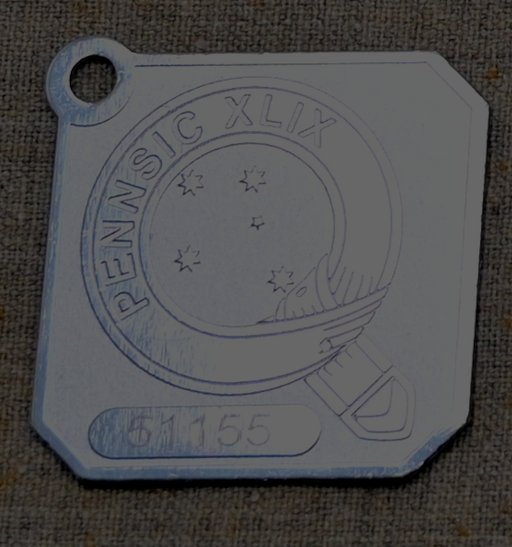
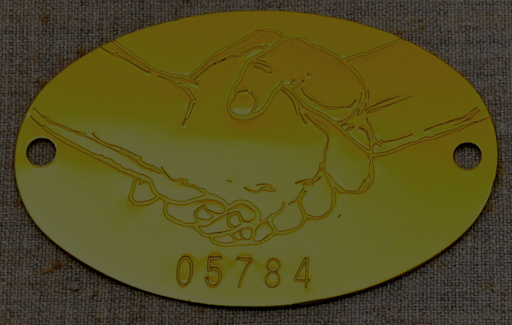
When you sign in at Pennsic, you are issued a metal medallion to wear that shows the event staff you’ve paid. Allows you to leave and reenter the site as needed. Of course, it’s a great opportunity to create a nice keepsake and some Mayors has done a better job than others over the years.

Here’s my almost complete collection of medallions with some notes.

Pennsic Medallions 17-33 Pennsic Medallions 34-50

And a breakdown by year. My first Pennsic was Pennsic 14 (1985) and with the exception of the Plague years (2020 and 2021) when they were (wisely) cancelled, I’ve been every year.


Pennsic 14
Date: Aug 10-18, 1985
Gate: 3,904
No Medallions Used?.
Notes: My first event

  Pennsic 15
Date: 9-17, Aug 1986
Gate: 4,114
No Medallions Used?.

 
Pennsic 16
Date: Aug 8-16, 1987
Gate: 4,600
No Medallions Used?

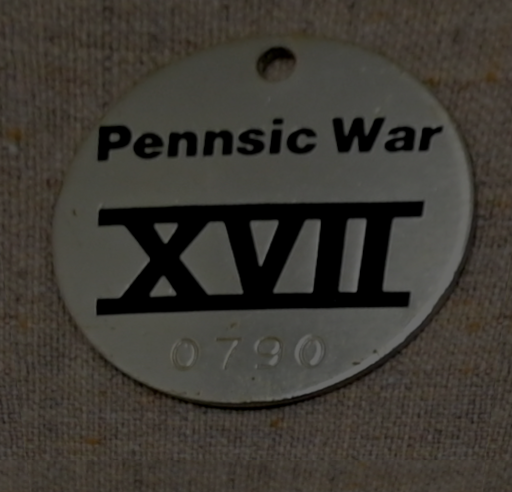
  Pennsic 17
Date: Aug 13-21, 1988
Gate: 5,204
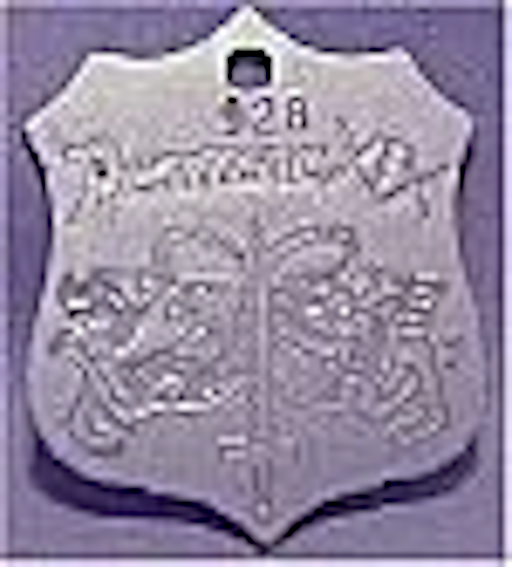
Material: Stamped Al
Attendee: 0790
Notes:
Pennsic War 17 Medallion

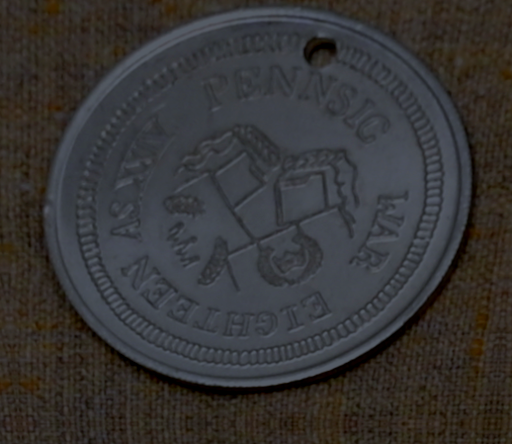
Pennsic 18
Date: Aug 12-20, 1989
Gate: 5,806
Material: Minted Al
Attendee: 1094
Notes:

Pennsic War 18 Medallion Pennsic 19
Date: Aug 4-19, 1990
Gate: 6,462
Material: Stamped Al
Attendee: ??
Notes: Missing the Medallion
Pennsic War 19 Medallion
Pennsic 20
Date: Aug 3-18, 1991
Gate: 7,805
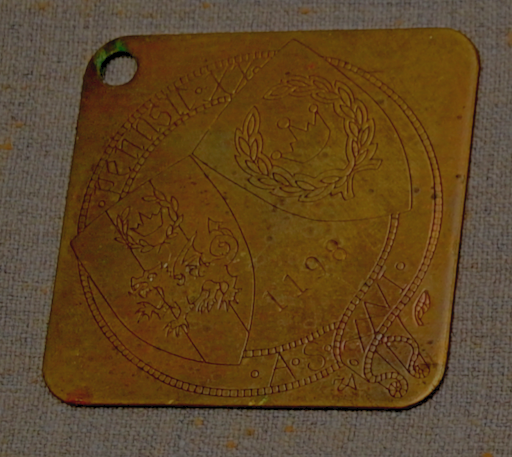
Material: Brass
Attendee: 1198
Notes: Prince of Atlantia (1)
Pennsic War 20 Medallion Pennsic 21
Date: Aug 1-16, 1992
Gate: 8,000
Material: Stamped Al
Attendee: 0318
Notes: Knighted Aug 12
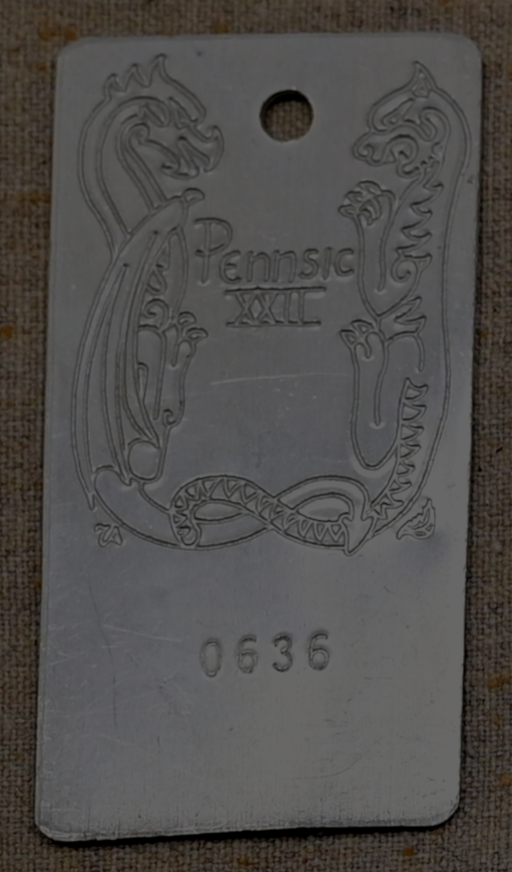
Pennsic 22
Date: Aug 7-22, 1993
Gate: 8,757
Material: Stamped Al
Attendee: 0636
Notes:
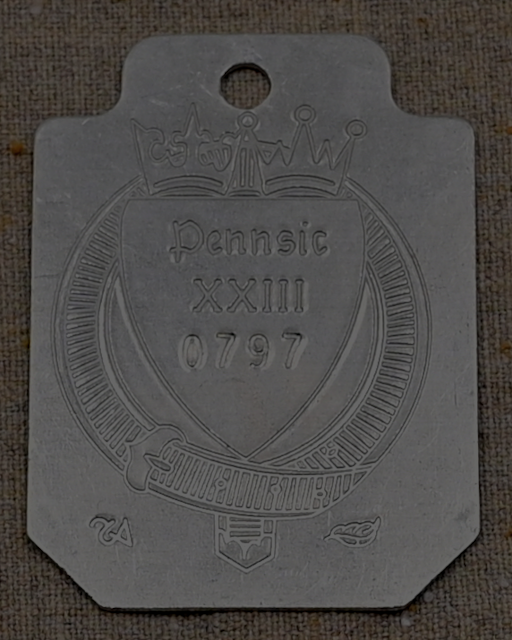
Pennsic 23
Date: Aug 6-21, 1994
Gate: 9,221
Material: Stamped Al
Attendee: 0797
Notes:
Pennsic War 23 Medallion
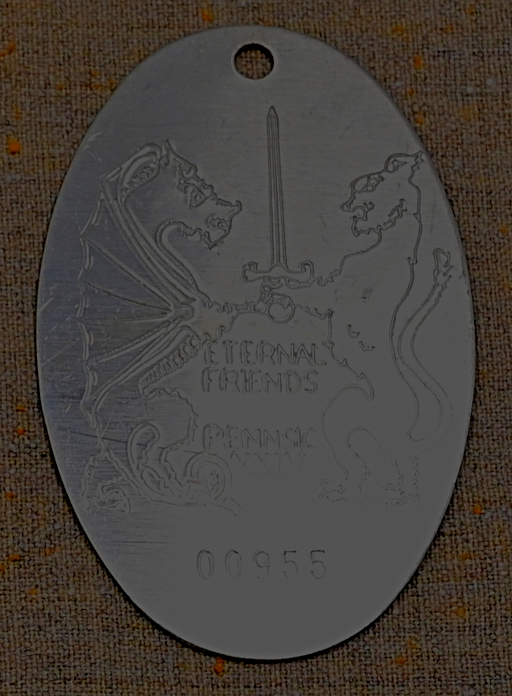
Pennsic 24
Date: Aug 5-50, 1995
Gate: 8,700
Material: Stamped Al
Attendee: 0956
Notes:
Pennsic War 24 Medallion Pennsic 25
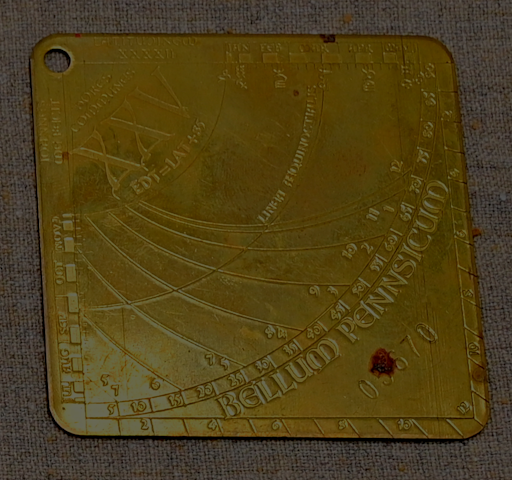
Date: Aug 3-18, 1996
Gate: 9,992
Material: Brass
Attendee: 5670
Notes: King of Atlantia (2)
Pennsic War 25 Medallion
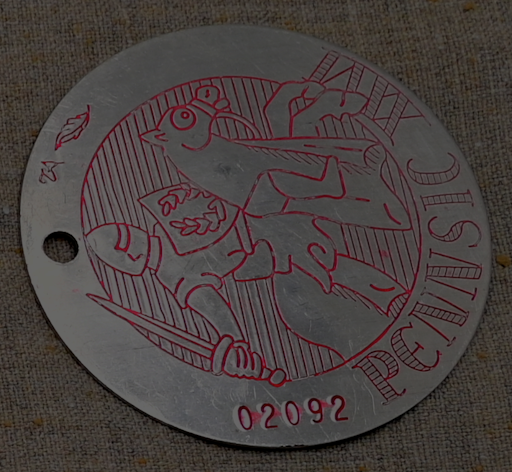
Pennsic 26
Date: Aug 2-17, 1988
Gate: 9,132
Material: Stamped Al
Attendee: 2092
Notes:
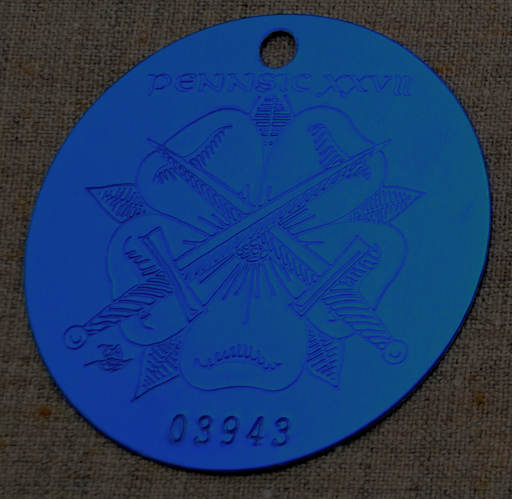
Pennsic War 26 Medallion Pennsic 27
Date: Jul 31- Aug 15, 1998
Gate: 5,204
Material: Stamped Al
Attendee: 3943
Notes:
Pennsic War 27 Medallion
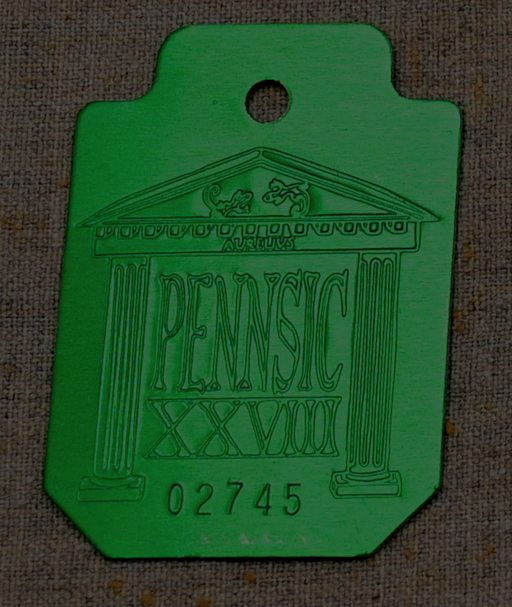
Pennsic 28
Date: Aug 7-22, 1999
Gate: 10,127
Material: Stamped Al
Attendee: 2745
Notes:
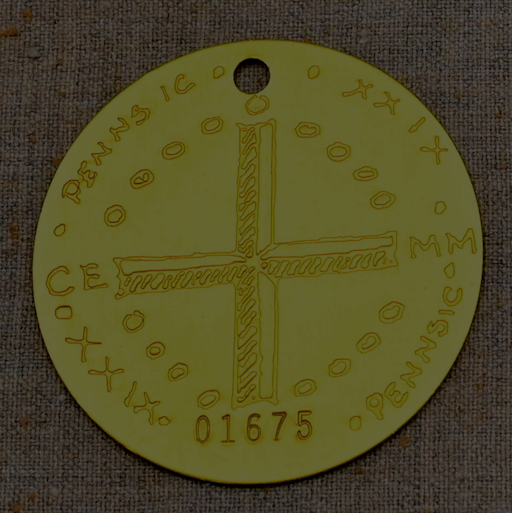
Pennsic War 28 Medallion Pennsic 29
Date: Aug 5-20, 2000
Gate: 12.001
Material: Stamped Al
Attendee: 1675
Notes:
Pennsic War 29 Medallion
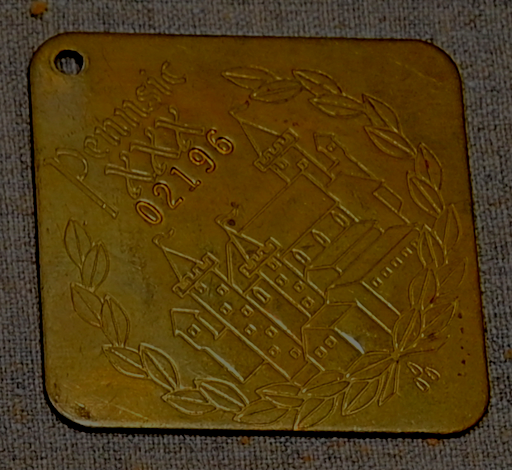
Pennsic 30
Date: Aug 4-19, 2001
Gate: 12,000
Material: Brass
Attendee: 2196
Notes: Prince of Atlantia (3)
Pennsic War 30 Medallion Pennsic 31
Date: Aug 3-18, 2002
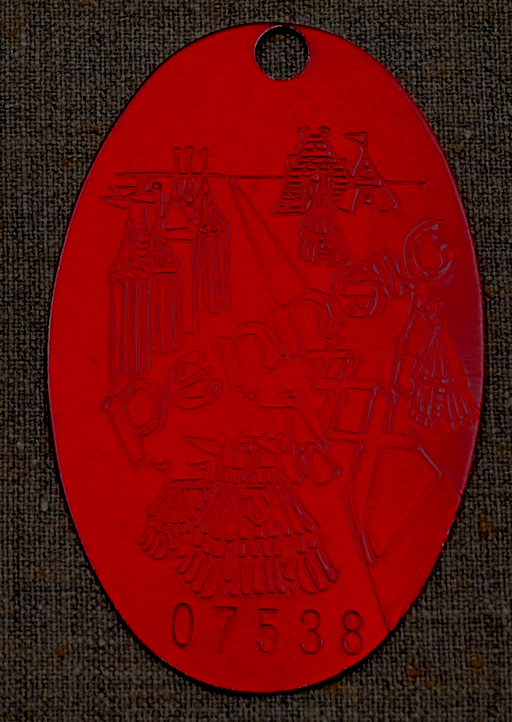
Gate: 11,273
Material: Stamped Al
Attendee: 7538
Notes:
Pennsic War 31 Medallion

Pennsic 32
Date: Aug 2-17, 2003
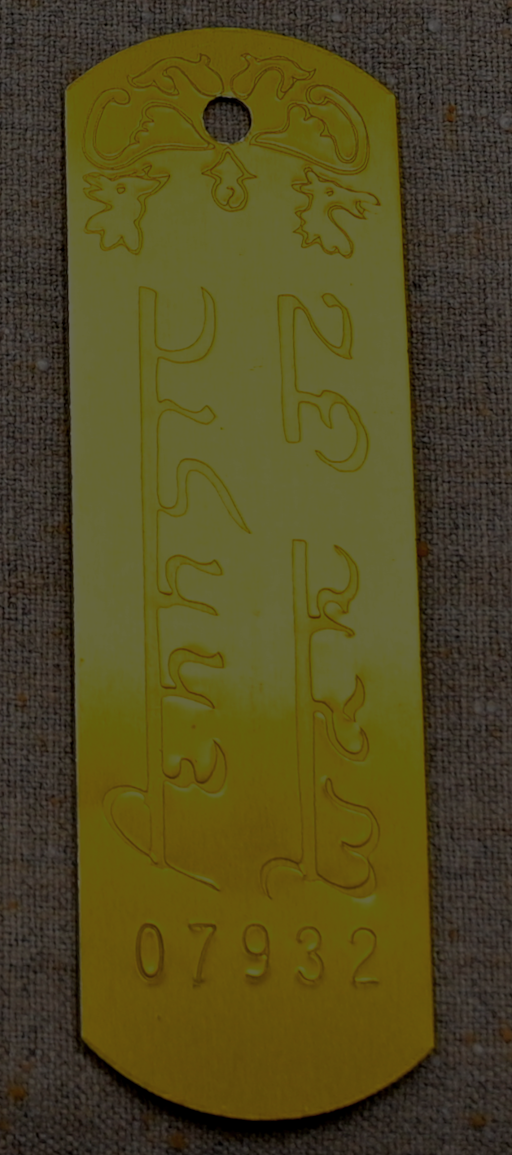
Gate: 11,374
Material: Stamped Al
Attendee: 7932
Notes:

Pennsic War 32 Medallion Pennsic 33
Date: Aug 7-22, 2004
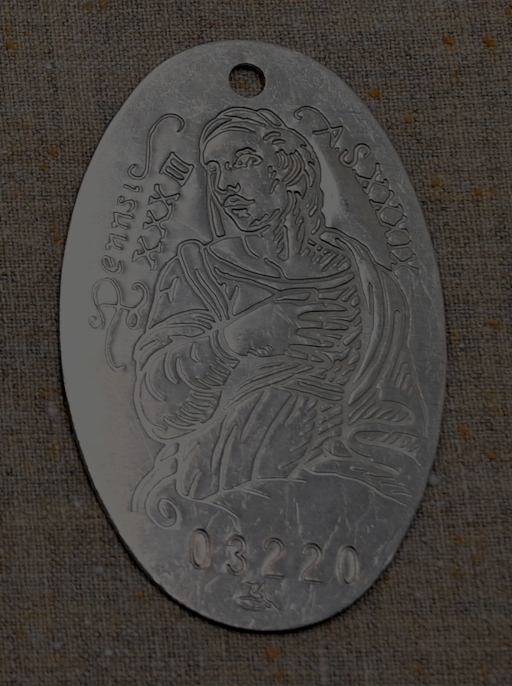
Gate: 11,374
Material: Stamped Al
Attendee: 3220
Notes:
Pennsic War 33 Medallion
Pennsic 34
Date: Aug 6-21, 2005
Gate: 11,298
Material: Stamped Al
Attendee: 8266
Notes:
Pennsic War 34 Medallion Pennsic 35
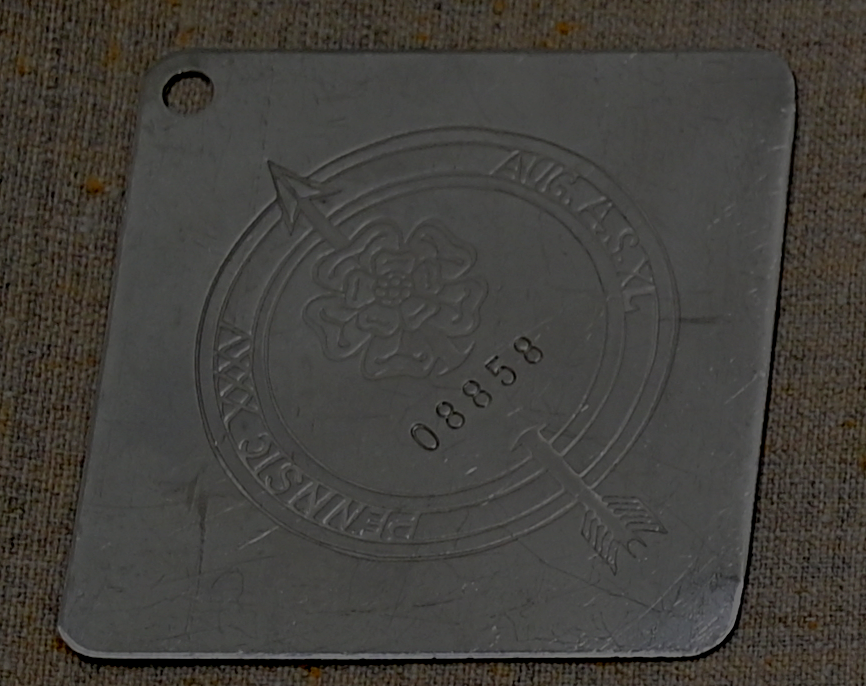
Date: Aug 5-20, 2006
Gate: 11,595
Material: Stamped Al
Attendee: 8858
Notes:
Pennsic War 35 Medallion
Pennsic 36
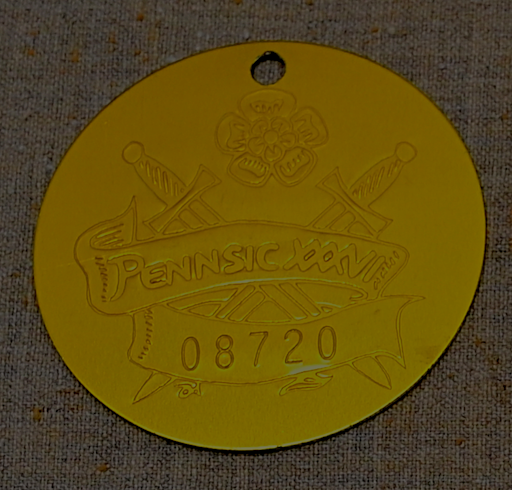
Date: Jul 27-Aug 12, 2007
Gate: 11,288
Material: Stamped Al
Attendee: 8720
Notes:
Pennsic War 36 Medallion Pennsic 37
Date:
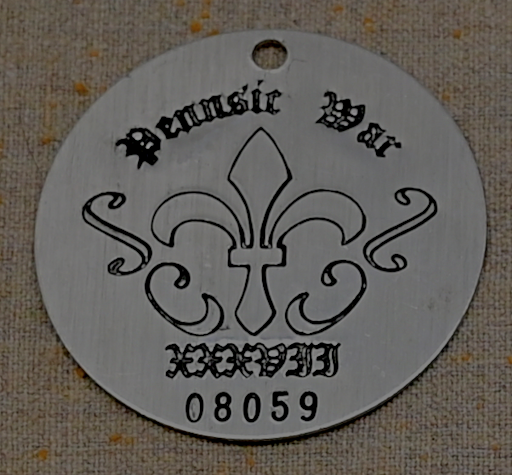
Jul 25-Aug 10, 2008
Gate: 10,525
Material: Stamped Al
Attendee: 8059
Notes:
Pennsic War 37 Medallion
Pennsic 38
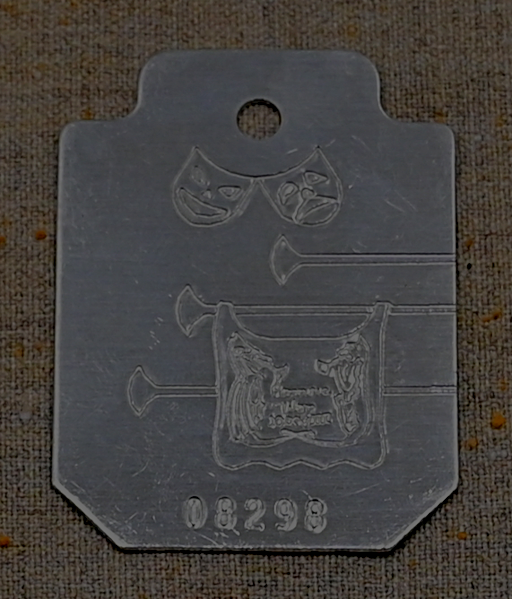
Date: Jul 24-Aug 9, 2009
Gate: 10,953
Material: Stamped Al
Attendee: 8298
Notes:
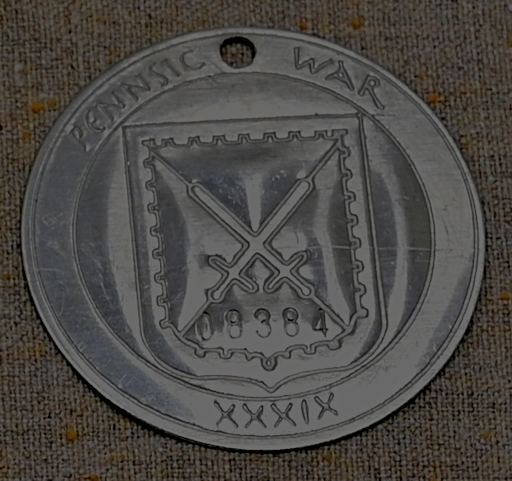
Pennsic War 38 Medallion Pennsic 39
Date: Jul 30-Aug 15, 2010
Gate: 10,832
Material: Stamped Al
Attendee:
Notes:
Pennsic War 39 Medallion
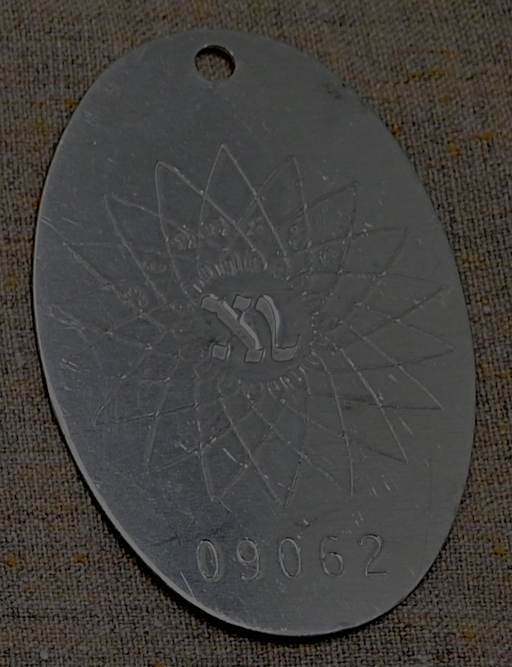
Pennsic 40
Date: Jul 29-Aug 14, 2011
Gate: 11,530
Material: Stamped Al
Attendee: 9062
Notes:
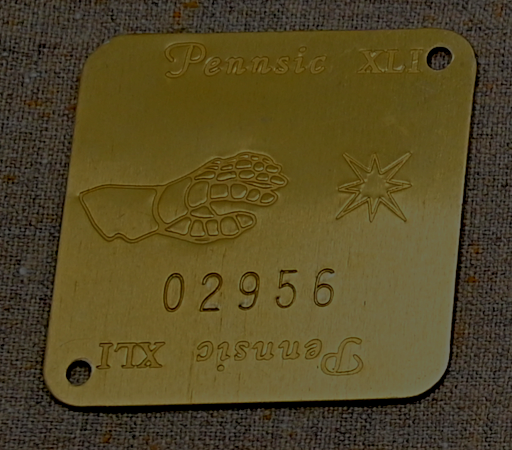
Pennsic War 40 Medallion Pennsic 41
Date: Jul 27-Aug 12, 2012
Gate: 10,695
Material: Stamped Al
Attendee: 2956
Notes:
Pennsic War 41 Medallion
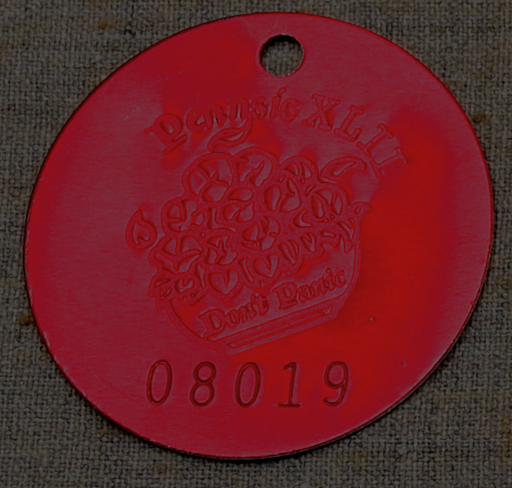
Pennsic 42
Date: Jul 19-Aug 3, 2013
Gate: 9,913
Material: Stamped Al
Attendee: 8019
Notes:
Pennsic War 42 Medallion Pennsic 43
Date: Jul 25-Aug 10, 2014
Gate: 10,695
Material: Stamped Al
Attendee: 5784
Notes:
Pennsic War 43 Medallion
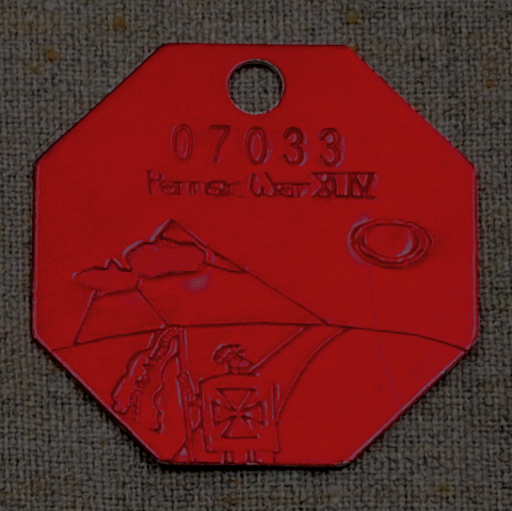
Pennsic 44
Date: Jul 24-Aug 9, 2015
Gate: 10,556
Material: Stamped Al
Attendee: 7033
Notes:
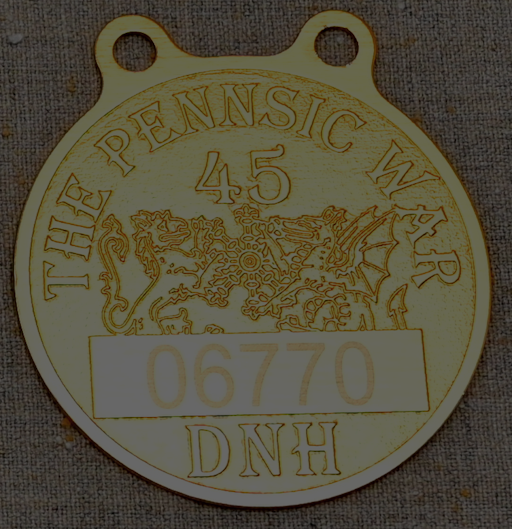
Pennsic War 44 Medallion Pennsic 45
Date: Jul 29-Aug 14, 2016
Gate: 10,940
Material: Cast Aluminum
Attendee: 6770
Notes:
Pennsic War 45 Medallion
Pennsic 46
Date: Jul 28-Aug 13, 2017

Gate: 10,590
Material: Cast Aluminum
Attendee: 4477
Notes:
Pennsic War 46 Medallion Pennsic 47
Date: Jul 27-Aug 12, 2018

Gate: 10,486
Material: Stamped Al
Attendee: (5)0991
Notes:
Pennsic War 47 Medallion
Pennsic 48
Date:
Jul 26-Aug 11, 2019

Gate: ??
Material: Cast Aluminum
Attendee: (5)1112
Notes:
Pennsic War 48 Medallion Pennsic 49
Date: Jul 26-Aug 14, 2022

Gate: ??
Material: Stamped Al
Attendee: (5)1155
Notes:
Pennsic War 49 Medallion
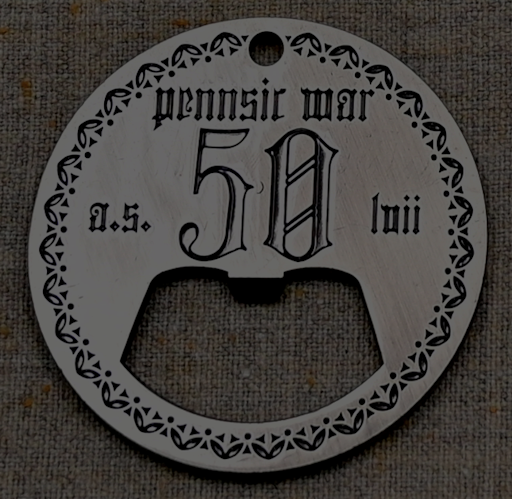
Pennsic 50
Date: Jul 28-Aug 13, 2023

Gate: 11,384
Material: Stamped Steel
Attendee: 7786
Notes:
Pennsic War 50 Medallion